

Hakuba Property for Sale: Chalets, Condos and Lodges
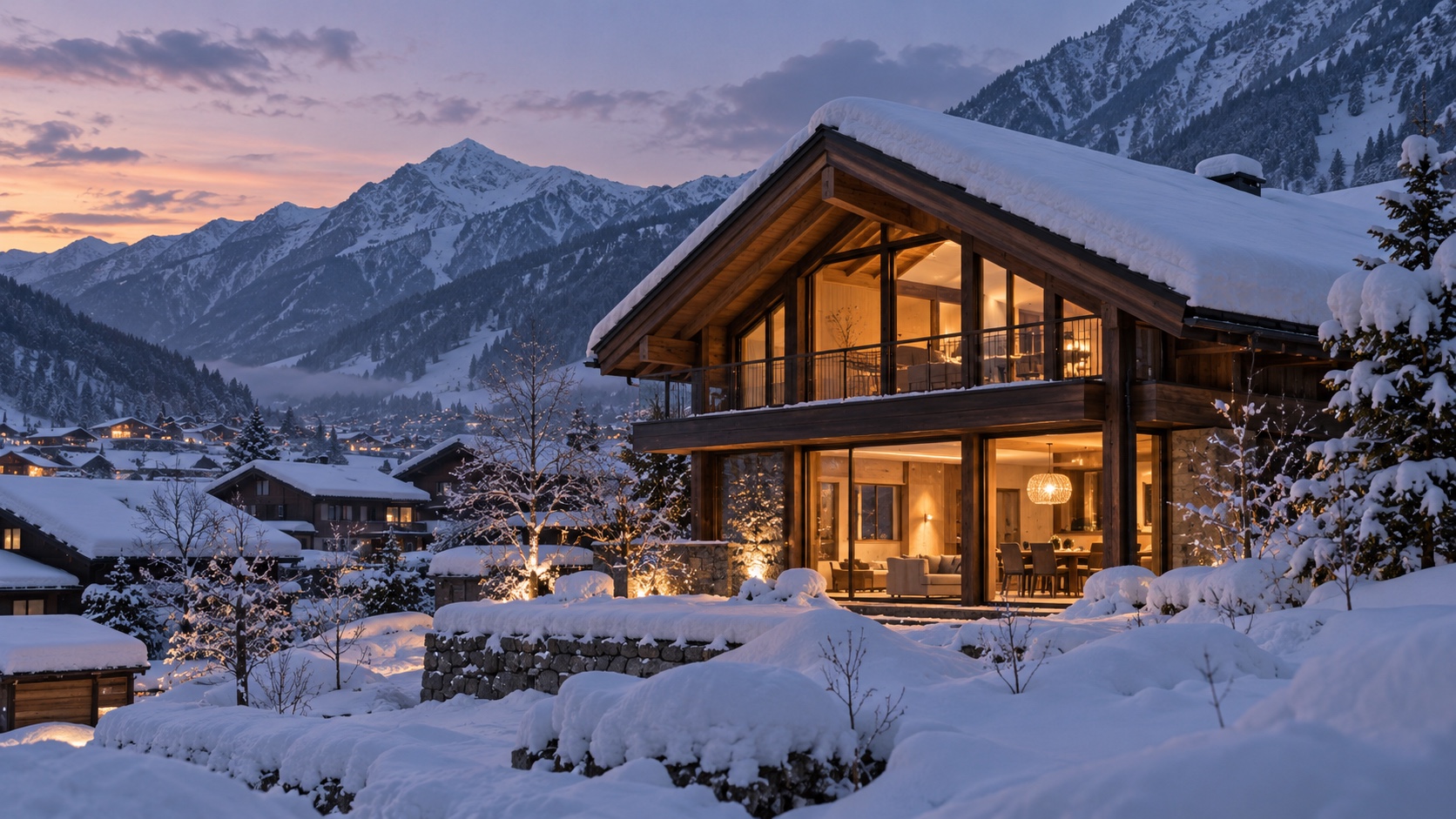
The first decision when buying in Hakuba is what you are buying: a chalet for your own use, a condo, or a lodge that is also a business, because each brings different village rules, winter upkeep and resale questions. In short: for a few weeks' use with little to manage, look first at a condo; for a chalet, budget for a winter manager; and judge a lodge as a business, from its guest records and licences, before the building.[1] As of October 16, 2026, the official figures point both ways: the appraised value of Hakuba's holiday-home survey plot rose about 2.7 times between 2021 and 2026, while the figures in the village's March 2026 tourism vision show 325 lodging-licence closures alongside 610 new licences between fiscal 2019 and 2024.[2][3] Use these figures to question a listing, not to price it.
Chalet, condo or lodge: which fits you
| If | Lean towards | Why |
|---|---|---|
| You will use it a few weeks a year and want little to manage | A condo with a management company | Shared upkeep is run through the building; check the fees and the repair plan[4][1] |
| You want space and privacy, and can arrange winter care | A chalet | You arrange draining, heating and roof snow, yourself or through a manager[5][6][1] |
| You want to run a business, or hire someone to run it | A lodge | You take on licences, guest records and staff, in a market that turns over[3] |
| You may sell within a few years | Check resale before choosing a type | MLIT cites demand from wealthy Japanese and foreign buyers of holiday homes and condos behind recent land-price rises; ask your agent who bought similar properties and how long the sales took[7][1] |
Hakuba property for sale: what to check by type
| If you are buying | Check first | Ask |
|---|---|---|
| A chalet for your own use | Winter access, roof snow, the water system and who drains it, any district landscape agreement[5][6][8] | Your agent, the village, a local management company |
| A condo | The management fees, the long-term repair plan and the repair reserve (MLIT publishes guidelines on both), and the building's rules on use and letting[4] | Your agent, for the exact clauses |
| A lodge or guesthouse | Which licences the business holds, the guest records, and the village's rules for lodging projects[9] | The seller, a specialist and the village |
| Land to build on | The landscape area and height limit, whether your plan needs notification or consultation, sewer or septic tank[8][10] | The village and an architect |
| Any building | The earthquake standard it was built to, its condition, and the hazard maps for the address[11][12] | An architect and insurers |
Hakuba lodges for sale: buying a licensed business
The village's figures, provided by the Omachi public health centre, show a lodging market that grows and turns over.[3]
| Licensed lodging premises in Hakuba | Figure |
|---|---|
| Registered at the end of fiscal 2019 | 969 |
| Registered at the end of fiscal 2024 | 1,191 |
| New licences in fiscal 2024 (hotels or inns / simple lodgings) | 130 (109 / 21) |
| Closures in fiscal 2024 | 53 |
| New licences, fiscal 2019 to 2024 | 610 |
| Closures, fiscal 2019 to 2024 | 325 |
The figures count licences, not buildings. The six-year totals include fiscal 2019, so they do not add up to the change in registrations. The village also notes that high-priced hotels are being planned, not only small premises.[3]
Foreign overnight guests are seasonal, with the most from December to March. In 2024, Australians made up about 45% of foreign guest-nights, the largest group. The village's monthly count of foreign overnight guests was 151,615 in December and 5,051 in July.[13]
What this means for a buyer:[1]
- The number of licensed premises is rising. Ask the seller for several years of guest records, not one good winter.
- Many licences are also surrendered. Ask why nearby lodges closed or changed hands, and how long similar properties took to sell.
- Check the property's own guests. If it relies on guests from Australia, a change in that market could affect its bookings.
Before you buy a lodge, also ask for:[1]
- Fire safety records. The latest inspection reports for the fire equipment, and any notices from the fire department.
- Staff. Who works there now, whether they stay after the sale, and where seasonal staff live.
- What you are buying. Whether you buy the building alone or the company that runs the business; ask a specialist which suits you.
- The quiet months. How the lodge runs and is maintained in the low season; in the prefecture's 2025 figures, April and November together accounted for about 5% of the year's visits to the Hakuba area.[14]
Whether a licence can pass to you, and what you would need to run the business, are questions for a specialist and the public health centre. Do not assume an existing lodge can keep operating unchanged.
Hakuba chalets and condos: winter upkeep from abroad
- Frozen pipes. The village warns that pipes and meters can freeze and burst at −4°C or below, and asks people to drain the water system before a long winter absence. It says the water user is responsible for everything on the house side of the meter.[5]
- A local agent. Article 10 of the village's water supply rules states that an owner of water supply equipment who does not live in the supply area must choose an agent who does and report that person to the mayor.[15] Ask the village whether this applies to your purchase.
- Snow. The village asks residents not to push snow onto the road, to clear roof snow that falls onto the road, and not to park where it blocks the ploughs.[6] Agree in writing who clears the roof, the drive and the entrance, how often, and at what cost.
- Condos. Ask for the long-term repair plan and the repair reserve, and compare them with MLIT's guidelines.[4]
- Letting a condo. Ask whether the building's rules allow letting and whether the building runs a letting arrangement, and read the clauses.[1]
- Comparing managers. Ask each management company for the same itemised list: draining and heating, roof snow, how often it inspects, who responds in an emergency, how it reports to you, and its fees in yen.[1]
Hakuba land for sale: building, extending or changing a property
Since October 2022 the village has set its own landscape rules, and its landscape plan has applied since January 1, 2023.[8] The village's summary lists, among other points:
- Height. Maximum heights of 13 m in mountain hamlet and farmland areas, and 18 m around Hakuba Station and in the tourism and ski areas, with specified exceptions.[8]
- Notification. Works it lists as notifiable, such as building work that needs building confirmation, exterior changes over 25 m² and earthworks over 300 m², are to be reported at least 30 days before work starts.[8]
- Resident agreements. Eight districts have landscape agreements among residents.[8]
- Larger projects. Buildings of 3,000 m² or more of floor area, and condominium developments of 3,000 m² or 10 or more units, are listed for prior consultation with the village.[10]
- New lodging developments. From December 17, 2026, the amended development rules cover developments of buildings used as hotels, inns or simple lodgings in either of two size categories: a development area of 2,000 m² to under 3,000 m², or a building of four or more storeys or 12 m or more. The listed procedures include explaining plans to nearby residents in advance and following the village's development standards. The amendment does not apply to buildings whose building confirmation had already been issued by then.[9]
Whether a rule applies to your plot or plan is a question for the village and an architect. Before buying land on a slope, also check the village's disaster map and the national hazard map portal for landslide risk at the address.[11][12]
Land values: what they show and what they do not
MLIT's annual Land Market Value Publication (chika kōji, called the national survey in this guide) values selected plots, known as standard plots (survey plots here), as of January 1 each year, as if the land had no building on it. These are appraisals, not sale prices.[16]
| National survey, yen per m² | 2021 | 2026 | Change |
|---|---|---|---|
| Hakuba, holiday-home area (Kitashiro) | 10,100 | 27,400 | about 2.7 times |
| Hakuba, farming hamlet | 7,040 | 8,970 | about 1.3 times |
| Hakuba, commercial | 15,400 | 40,300 | about 2.6 times |
| Kutchan (Niseko), Hirafu residential | 135,000 | 200,000 | about 1.5 times |
Small starting values make multiples look large. In 2026, the holiday-home plot's 33.0% rise was the largest among the survey's residential plots nationwide; that is one plot.[17] In the prefectural survey as of July 1, 2026, two Hakuba residential plots rose 31.3% and 31.1%.[18] MLIT links the rises to demand for holiday homes and condos from wealthy Japanese and foreign buyers, and says the demand has spread to nearby residential areas.[7]
In Hirafu, the survey plot rose 50.0% in 2019, then slowed to 3.3% in 2023 before rising again.[19] At that Hirafu plot, annual rises of 30% or more did not last. The farming-hamlet plot shows that land in the same village moved at very different speeds.[2]
The appraisal reports behind these figures also describe the market. For the holiday-home plot in 2026, both appraisers placed demand mainly with investment buyers, including wealthy buyers from Japan and abroad, noted some deals at markedly high prices, and said the price range buyers pay was hard to pin down. One said the main buyers are wealthy individuals, companies and investors from Japan and abroad who plan to build rental chalets or hotels, that fewer Japanese individuals now buy holiday or permanent homes there, and that properties for sale have become scarce. Both also describe the plot's neighbourhood as a holiday-home area where transactions are mainly for the owners' own use, with almost no rental properties such as apartments to compare, so neither calculated an income-based value.[20] For you, this means that, at least around this survey plot, you may be competing with investors for the same properties, and the official appraisals there offer no rental benchmark: if a seller shows rental projections, ask for the booking and income records behind them.[1]
As a sense of scale only: the appraisers took about 1,000 m² as the typical plot size around this survey plot, and at the 2026 value of ¥27,400 per m² such a plot would be about ¥27.4 million as vacant land. If a chalet on a plot like that is offered at ¥100 million, most of the price is not explained by the land's appraised value; the gap would differ for a smaller plot or one elsewhere in the village. Ask your agent how the price breaks down and what supports each part, such as recent nearby transactions and a building inspection.[21] Actual plots sell above or below appraised values, so do not use a survey value to price a plot you are viewing. For actual sale prices, MLIT's Real Estate Information Library lets you search transaction and contract prices.[22]
Reporting, moving money and selling later
- Reporting the purchase. Japan's Ministry of Finance says that, under the Foreign Exchange and Foreign Trade Act, a non-resident who acquires real estate in Japan must submit a report to the Minister of Finance through the Bank of Japan within 20 days of acquiring it, whatever the price; a resident agent, such as a real estate broker, can submit it. Its FAQ, written for rules in force from April 1, 2026, says that buying the property itself has to be reported whatever the purpose: the few exemptions apply only to rights over property, such as leaseholds, and for the residential-use exemption, holiday homes and second homes do not count as residential use. Whether you count as a non-resident, and who will submit the report, are questions for your agent.[23]
- Moving money. Ask your bank how you will send the purchase money to Japan, when you will change it into yen, and how you would bring sale proceeds back.[1]
- Who buys. MLIT links recent price rises to demand for holiday homes and condos from wealthy Japanese and foreign buyers.[7] The 2026 appraisals for the holiday-home plot describe demand centred on investors, in a neighbourhood where transactions are mainly for the owners' own use.[20] Ask your agent who bought similar properties nearby, whether they lived in Japan or abroad, and how long the sales took.[1]
- Lodges. A lodge sells as a business as well as a building; keep the guest records and licence papers in order from the day you buy.[1]
Seasons, snow and access
- Snow. At the village weather station, the 1991–2020 normals show 655 cm of snowfall a year and at least 5 cm of snow on the ground on about 94 days. Hakuba is a special heavy-snow area, a national designation for the snowiest places.[24][25]
- Seasons. In 2025 the prefecture counted about 2.85 million visits to the Hakuba foothills; January to March made up about 42%, and April and November together about 5%.[14] The village's monthly population also rises in winter: in fiscal 2024 it was 9,621 in February and 8,383 in November.[26] Ask which shops, clinics and services near the property stay open all year.[1]
- Access. The village gives about 2 hours 30 minutes from Tokyo by the Hokuriku Shinkansen and a bus, and about 4 hours by car.[27]
Earthquakes and other hazards
- The fault zone. The northern section of the Itoigawa–Shizuoka Tectonic Line fault zone runs through Hakuba. If the whole section moved, an earthquake of about magnitude 7.7 could occur. The Earthquake Research Committee puts the probability within 30 years at 0.01% to 16%, as of January 1, 2026, in its "high" rank.[28]
- 2014. A magnitude 6.7 earthquake on the Kamishiro fault destroyed 42 homes in the village and half-destroyed 35, by the prefecture's tally.[29]
- Maps. The village's disaster map and the national hazard map portal show risks for areas.[11][12] Ask an architect about the building's earthquake resistance and roof snow loads.
When the answer changes
- The seller cannot show several years of guest records. Value the lodge as a building, not as a business.[1]
- The licence cannot pass to you. Ask the village and an architect whether the building could be used as a home, and value it on that basis.[1]
- You plan a new or larger lodge. The village's rules from December 17, 2026 may apply; ask the village before you buy.[9]
- Land values slow. Demand for holiday homes and condos from wealthy Japanese and foreign buyers, which MLIT names, can change; at the Hirafu survey plot, the annual rise slowed to 3.3% in 2023 before rising again. Judge the property on its use to you, not on past rises.[7][19]
- The lodging market shifts. New licences keep being issued, and many are surrendered. Foreign overnight guests are most numerous from December to March, and Australians are the largest group.[3][13]
- You will be away all winter. Draining, heating, snow clearing and a local manager cost money every year; get itemised written quotes in yen before you commit.[1]
- You measure wealth in another currency. Upkeep and value will move with the yen.[1]
Before you make an offer
| Ask | Question |
|---|---|
| Your agent | Which survey plots are nearest, and what have recent sales nearby been? How long did they take? |
| A management company | Who drains, heats and clears snow, and acts as your local contact, at what yearly cost? |
| The village | Which landscape area is the plot in, is there a district agreement, and what height applies? |
| The seller (lodge) | Which licences does the business hold, and can you see several years of guest records? |
| A specialist | What would you need to run the lodge, and can the licence pass to you? |
| An architect | How was the building designed for earthquakes and snow loads? |
| Your agent (reporting) | If you are a non-resident, who will submit the purchase report, and by when? |
| Your bank | How will you send money to Japan, and when will you change it into yen? |
| Tax and loans | Ask a tax accountant and lenders; this guide does not cover them. |
FAQ
Is buying a lodge different from buying a home? Yes. You are also taking on a business, so check the licences and guest records as carefully as the building.[1]
Are Hakuba land prices still rising? In both 2026 surveys, Hakuba's plots were among the fastest-rising in Japan. These are past figures for a few plots, and the annual rise at the Hirafu plot cited here slowed to 3.3% in 2023 before rising again.[17][18][19]
Does the land price tell me what a chalet should cost? No. It values a plot as if it had no building, and it is not a sale price.[16]
Who looks after a Hakuba home while I am abroad? An owner abroad may contract a local management company.[1] Separately, Article 10 of the village's water rules states that owners of water supply equipment living outside the supply area must name a local agent; ask the village whether it applies.[15]
Browse listings in Nagano
To compare what is for sale, open our listings and narrow them to Nagano, then search for any Hakuba properties. Our Nagano prefecture guide gives a wider view of the prefecture. If you find a lodge-type listing, take the lodge questions above to it; for a chalet, take the winter-upkeep list. For any lodge, confirm with the seller and a specialist which licences it holds.
Sources
- SORA editors' notes for owners who live abroad; not tax, currency or legal advice.
- Appraisal reports for the national survey, MLIT Real Estate Information Library: Hakuba-1 for 2022 and 2026, Hakuba-2 for 2022 and Hakuba 5-1 for 2022; 2026 national land price survey, Nagano Prefecture standard plots, MLIT (March 2026). Multiples are SORA's calculation.
- Hakuba Village tourism destination management vision, Hakuba Village (March 2026), printed page 9 (PDF page 10): licences under the Inns and Hotels Act, with registrations and closures provided by the Omachi public health centre
- Condominium management: long-term repair plan guideline and repair reserve guideline, MLIT (revised June 7, 2024)
- Preventing frozen water pipes, Hakuba Village (January 9, 2024)
- Cooperation with snow clearing, Hakuba Village (December 4, 2025)
- 2026 national land price survey, regional land price trends, MLIT (March 18, 2026); Land price trends in tourist areas: Hakuba Village, MLIT (September 16, 2026)
- Landscape administrative bodies in Nagano Prefecture, Nagano Prefecture (April 1, 2026); Hakuba Village landscape guidelines (summary of the landscape plan), Hakuba Village (April 2026)
- Partial amendment of the Hakuba Village development coordination ordinance and development guidelines, Hakuba Village (September 17, 2026)
- Development rules under the City Planning Act, Hakuba Village (September 17, 2026)
- Disaster prevention and hazard map, Hakuba Village (December 1, 2022)
- Hazard Map Portal Site, MLIT and Geospatial Information Authority of Japan
- Hakuba Village tourism destination management vision, Hakuba Village (March 2026), printed page 14 (PDF page 15): foreign guests
- Tourist site visitor statistics, 2025, Nagano Prefecture (September 2026)
- Hakuba Village water supply rules, Article 10, Hakuba Village (as amended July 29, 2024)
- Outline of the Land Market Value Publication system (chika kōji), section 1 of MLIT's report on the 2021 publication and land prices, Ministry of Land, Infrastructure, Transport and Tourism
- 2026 national land price survey, plots with the highest rates of change nationwide, MLIT (March 18, 2026)
- 2026 prefectural land price survey, plots with the highest rates of change nationwide, MLIT (September 16, 2026)
- National land price survey, MLIT: plots with the highest rises in 2019; appraisal reports for the Hirafu plot (Kutchan-3) for 2022, 2023, 2024 and 2026. The multiple is SORA's calculation.
- Appraisal reports for Hakuba-1 (two appraisers), 2026 national land price survey, MLIT Real Estate Information Library (January 2026): market characteristics and the reasons for the value
- SORA's calculation (about 1,000 m² × ¥27,400): the typical plot size in the 2026 appraisal report for Hakuba-1 and Hakuba-1's 2026 value in the 2026 national land price survey, standard plots in Nagano Prefecture, MLIT (March 2026). An illustration of scale, not a valuation.
- Real Estate Information Library, MLIT
- Reporting of acquisitions of real estate in Japan by non-residents: overview, Ministry of Finance; FAQ, Ministry of Finance (June 2026), questions 1, 2, 7 and 10
- Climate normals for Hakuba, Japan Meteorological Agency and snow details (1991–2020 normals)
- Eighth Nagano Prefecture comprehensive snow plan, Nagano Prefecture (March 2023)
- Hakuba Village tourism destination management vision, Hakuba Village (March 2026), printed page 7 (PDF page 8): population by month
- Moving to Hakuba: access, Hakuba Village (May 10, 2024)
- Updated long-term earthquake probabilities (as of January 1, 2026), Earthquake Research Committee (January 14, 2026); Long-term evaluation of the Itoigawa–Shizuoka Tectonic Line fault zone, second edition, Earthquake Research Committee (April 24, 2015)
- Damage in Nagano Prefecture from the 2014 Kamishiro fault earthquake, Nagano Prefecture (as of April 1, 2016)
Related articles
 Topics
SORA Partners with Cyber Bunny, a Tokyo-Based Content Creator
SORA Co., Ltd., the operator of realestatejapan.jp, has entered into a referral partnership with Cyber Bunny,…
October 15, 2026
 Topics
SORA Partners with Hotel101 Global on Hotel101 – Niseko
SORA Co., Ltd., the operator of realestatejapan.jp, has signed a non-exclusive Marketing Partner Agreement…
October 14, 2026
 Topics
SORA Forms a Business Alliance with Baashir Advisory Group in Hong Kong
SORA Co., Ltd., the operator of realestatejapan.jp, has entered into a business alliance with Baashir…
October 6, 2026