

Umeda, Namba, Tennoji, Kitahama: Where to Buy an Apartment in Osaka
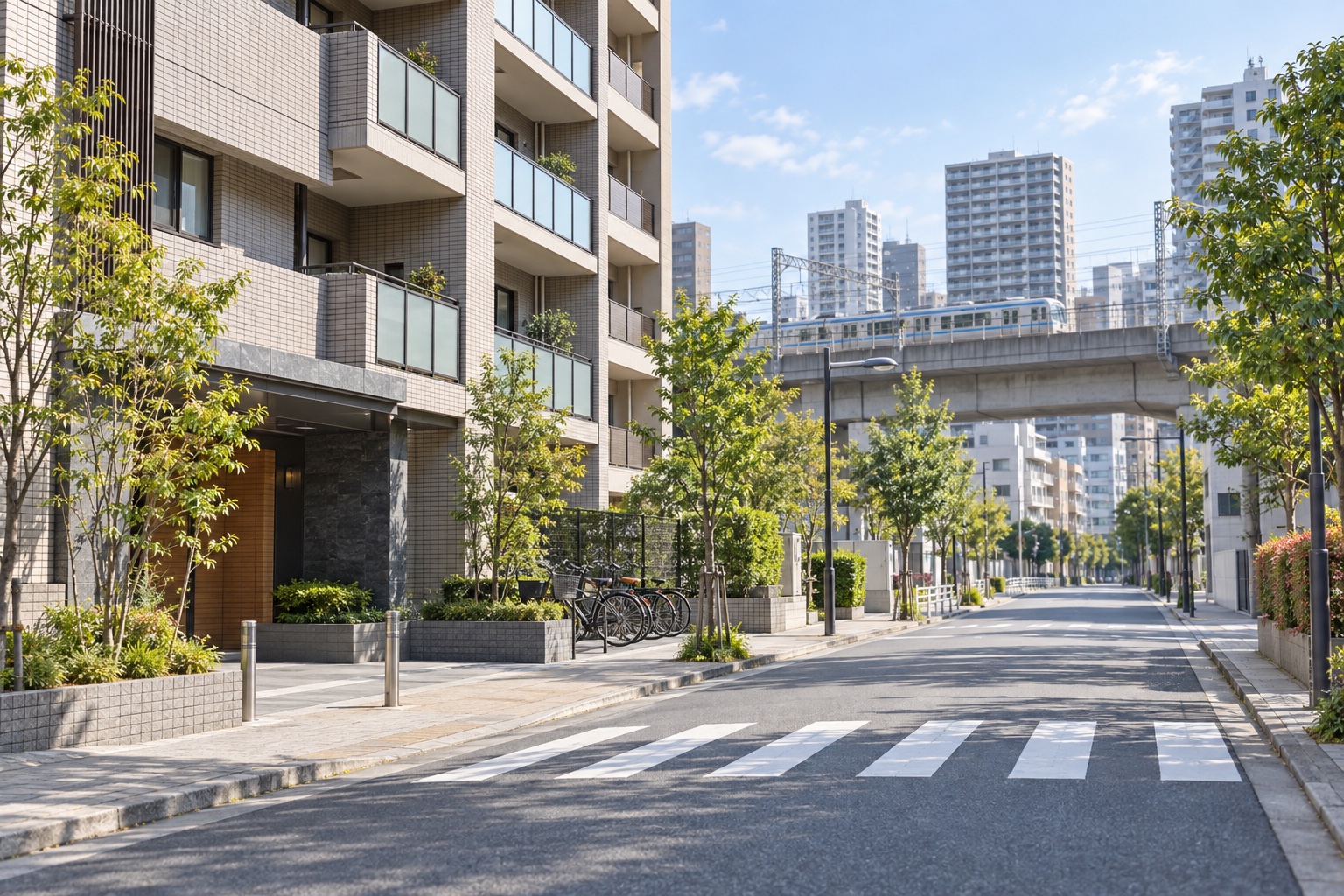
Looking for an apartment for sale in Umeda or Namba, or weighing them against Tennoji and Kitahama? Choose by how you will use the home. In our view, Umeda suits buyers who travel often by Shinkansen or to Kyoto and Kobe and want to be near the redevelopment around Osaka Station. Namba suits those who want a direct limited express to Kansai Airport and through trains to Kobe and Nara. Tennoji pairs a large rail hub, with limited expresses to the airport and trains to Nara, with residential streets nearby. Kitahama is a business district with direct trains to central Kyoto, but no direct train to the airport.[1][2] This guide reflects information as of July 28, 2026.
This guide compares the four districts for buyers of condominiums (apartments). Whichever district you choose, we suggest giving each building's management, age and flood exposure as much weight as the district itself.[3]
How the four districts fit together
JR Osaka Station, the heart of Umeda, is in Kita Ward. Nankai Namba Station is in Chuo Ward, and part of the Namba area lies in Naniwa Ward. JR Tennoji Station is in Tennoji Ward, while the Abeno Harukas tower next to the station area is in Abeno Ward. Kitahama is in Chuo Ward.[4] In this guide, the four names mean the wider areas around the stations, not exact administrative areas, so check which ward a building is actually in.
Umeda, Namba and Tennoji all have stations on the Osaka Metro Midosuji Line, which also runs to Shin-Osaka, where you change to the Shinkansen.[5] Kitahama Station is served by the Keihan Main Line and the Osaka Metro Sakaisuji Line.[6]
Travel times on one yardstick. JR West's Fact Sheets 2025 compare the fastest weekday daytime trains on main routes:[7]
- Osaka to Kyoto (JR): 28 minutes
- Osaka to Sannomiya in Kobe (JR): 21 minutes
- Tennoji to Nara (JR): 33 minutes
- Tennoji to Kansai Airport (JR): 49 minutes, or 32 minutes by limited express
- Namba to Kansai Airport (Nankai): 43 minutes, or 34 minutes by limited express
- Yodoyabashi, the next station from Kitahama, to Sanjo in Kyoto (Keihan): 50 minutes
The limited expresses in this list need a limited express ticket on top of the fare.[7] Timetables change, so check the current one for the hours you travel.
Umeda: apartments near Osaka Station and Umekita
Getting around. From Osaka Station, JR Kyoto Line trains run to Shin-Osaka and Kyoto, and JR Kobe Line trains run to Sannomiya. Hankyu trains from Osaka-Umeda Station also run to Kyoto-Kawaramachi and Kobe-Sannomiya.[8] Since new underground platforms opened at Osaka Station on March 18, 2023, the Haruka limited express to Kansai Airport stops at Osaka Station; before that it did not.[9] When the change was announced, JR West gave the average daytime journey by Haruka from Osaka Station to Kansai Airport as 47 minutes. That is an average, not the fastest train, so it is not directly comparable with the figures above.[10]
What is changing. Grand Green Osaka, the second phase of the Umekita redevelopment beside the station, had its first-phase opening on September 6, 2024. The rest is opening in stages, with the full opening planned for fiscal 2027, which runs from April 2027 to March 2028.[11] Further ahead, in 2017 Osaka Prefecture, Osaka City and three railway companies set a target of spring 2031 for the Naniwasuji Line, a planned link from the Umekita area of Osaka Station to JR Namba and Nankai's Shin-Imamiya. Its intermediate station names are provisional.[12] Plans and dates for large projects can change, and none of this tells you what will happen to the value of a home.
Our view of the area. Umeda is one of Osaka's main station and office districts. In our experience, homes near the stations are often in high-rise condominium buildings.[3]
May suit buyers who travel often by Shinkansen or to Kyoto and Kobe, and who want to live close to the station and the redevelopment.[1]
Watch out for. The rest of the redevelopment is still opening in stages, so ask about building work planned around any building you consider. Osaka City's hazard map for Kita Ward assumes flooding from the Yodo River and other rivers, storm surge, and flooding when drains overflow in heavy rain, as well as tsunami flooding after a Nankai Trough earthquake.[13] Check the map for the exact address.
Namba: apartments by the airport line and the shopping streets
Getting around. Nankai's rapi:t limited express runs between Namba and Kansai Airport in as little as 34 minutes.[14] From Osaka-Namba Station, a separate station nearby, the Hanshin Namba Line has allowed single trains to run between Kobe-Sannomiya and Kintetsu Nara since it opened on March 20, 2009.[15] Namba is also on the Midosuji Line to Umeda and Shin-Osaka.[5]
What is changing. A pedestrian plaza in front of Nankai Namba Station opened on November 23, 2023, and a pilot project on how to manage and use it began the same day. Namba Hiroba was its provisional name at the time.[16] The planned Naniwasuji Line would also link the Namba side directly with the Umekita area of Osaka Station.[12]
Our view of the area. In our impression, Namba is a shopping, dining and entertainment district that draws large crowds, including many visitors. Condominiums sit among commercial buildings, and some streets stay busy late into the evening.[3]
May suit buyers who fly in and out of Kansai Airport often, and those who want direct trains to Kobe and Nara.[1]
Watch out for. Noise and crowds vary from street to street, so visit at night and at the weekend as well as on a weekday. Osaka City's hazard maps for Chuo Ward and Naniwa Ward both assume river flooding, storm surge, flooding when drains overflow, and tsunami flooding after a Nankai Trough earthquake.[13] Check the map for the ward the building is actually in.
Tennoji: a major station near the Uemachi Plateau
Getting around. Tennoji has JR and Osaka Metro stations. JR limited expresses reach Kansai Airport in as little as 32 minutes, and JR trains reach Nara in 33 minutes, by JR West's comparison.[7] The Midosuji Line runs north to Namba, Umeda and Shin-Osaka.[5]
Our view of the area. Next to the station area stands Abeno Harukas, the 300 m Kintetsu Group tower that had its grand opening in 2014.[17] Part of the district lies on the Uemachi Plateau, a band of higher ground that runs south from Osaka Castle toward Tennoji and Sumiyoshi, between lower land to the east and west.[18] In our impression, the busy area around the station feels quite different from the residential streets around it, where condominiums sit alongside temples and schools.[3]
May suit buyers who want a large station, airport access and trains to Nara, together with a more residential setting.[1]
Watch out for. Higher ground does not mean no flood risk. Osaka City's hazard maps for Tennoji Ward and Abeno Ward assume flooding from the Yamato River and other rivers, storm surge, and flooding when drains overflow. Neither ward's map lists a tsunami scenario, but the city notes that areas not shown as flooded on its maps can still flood.[13] The station area spans two wards, so check the map for the right one.
Kitahama: apartments in the business district
Getting around. Keihan trains from Kitahama run directly to Gion-Shijo and Sanjo in central Kyoto.[6] Neither the Keihan Main Line nor the Sakaisuji Line runs to Shin-Osaka or Kansai Airport, so from Kitahama Station you change trains for both.[2] Yodoyabashi, the next station on the Keihan line, is also a Midosuji Line station; check the walking route to it from any building you consider.[6]
Our view of the area. The Osaka Exchange is located in Kitahama.[6] In our view, it is a business and financial district, where homes tend to be in condominium buildings among the offices, and evenings and weekends feel calmer than in Umeda or Namba.[3]
May suit buyers who go to central Kyoto often, or who want a calmer setting in the city center.[1]
Watch out for. Check that the shops and services you would use day to day are open at the times you need them. Kitahama is in Chuo Ward, where the city's hazard map assumes river flooding, storm surge, flooding when drains overflow, and tsunami flooding.[13] In spring 2026 the city also published a new flood map for the Higashi-Yokobori River, which assumes flooding in parts of Chuo Ward; check it alongside the ward map.[19]
What can change the answer
- How often you go to the airport. Tennoji, Namba and Osaka Station all have direct limited expresses to Kansai Airport; Kitahama does not.[9][7][2]
- Where else you travel. Umeda has JR and Hankyu trains to Kyoto and Kobe. Kitahama has Keihan trains to central Kyoto. Namba has through trains to Kobe and Nara, and Tennoji has JR trains to Nara.[8][7][15][6]
- Whether you will live there or rent it out. Building bylaws, the building's own rules adopted by the owners, can differ from building to building. MLIT's model bylaws give alternative clauses for allowing or prohibiting private lodging, so the same district can suit one plan and not another.[20] Ask your agent for the bylaws of any building you consider.
- Flood exposure of the exact address. Hazard maps differ within a single ward, and new flood maps are added from time to time.[13][19]
- Planned rail lines and redevelopment. The Naniwasuji Line and the rest of Grand Green Osaka are plans with target dates.[11][12] Do not base a purchase on a schedule that may change.
What to check before you choose a building
- Osaka City's hazard map for the address. MLIT's Real Estate Information Library also shows official flood and tsunami zones; check the city's hazard map as well.[13][21]
- Published examples of recent transaction and contract prices nearby. MLIT's Real Estate Information Library, launched on April 1, 2024, lets anyone search them by area. They are examples, not a full record of every sale.[21]
- The building bylaws: short-term rental, pets and renovation.[20]
- The year the building was completed and the seismic standard it was built to.
- The monthly management fee, the repair reserve and the long-term repair plan.
- Building work planned near the property.
- Taxes, financing and residence status. Ask your agent and a qualified professional; this guide does not cover them.
See current listings
The points above apply whichever agent you use.
You can browse our current listings. Listings change often, so check the location, ward and current status of each one.
Sources
- Editorial view by SORA, based on the transport links cited in this guide.
- Osaka Metro: Sakaisuji Line stations and Keihan: Stations, Japanese
- Editorial view by SORA, as a brokerage, based on the districts' transport and land use and the sources above; not a statistic.
- JR West: Osaka Station, Nankai: Namba Station, Osaka City: Naniwa Ward street names, JR West: Tennoji Station, Kintetsu Real Estate: Abeno Harukas building outline, Japan Exchange Group: Osaka Exchange address, all Japanese
- Osaka Metro: Midosuji Line stations and Osaka Metro: Route map, April 2025, Japanese
- Keihan: Stations, Japanese and Japan Exchange Group: Osaka Exchange address, Japanese
- JR West: Fact Sheets 2025, comparison with private railways (fastest weekday daytime trains), Japanese
- JR West: Osaka Station platforms (map as of January 14, 2026), Japanese and JR West: Fact Sheets 2025, comparison with private railways, Japanese
- JR West: Access with the opening of Osaka Station (Umekita area), March 9, 2023, Japanese and JR West: Spring 2023 timetable revision, December 9, 2022, Japanese
- JR West: Main journey times after the spring 2023 timetable revision, December 16, 2022, Japanese
- Mitsubishi Estate and partners: Grand Green Osaka first-phase opening, September 6, 2024, Japanese and Grand Green Osaka schedule, April 23, 2026, Japanese
- Osaka Prefecture, Osaka City, JR West, Nankai and Hankyu: Toward the Naniwasuji Line, May 23, 2017, Japanese and Nankai: Integrated Report 2023, Japanese
- Osaka City flood hazard maps, text versions dated May 29, 2026, Japanese: Kita Ward, Chuo Ward, Naniwa Ward, Tennoji Ward, Abeno Ward; and Osaka City: Flood hazard maps overview
- Nankai: News release on rapi:t, August 2, 2024, Japanese
- Hanshin: Fifteen years of the Hanshin Namba Line, March 18, 2024, Japanese
- Nankai and partners: Pilot project for the plaza in front of Namba Station, November 8, 2023, Japanese
- Kintetsu: Abeno Harukas grand opening, February 21, 2014, Japanese and Kintetsu Real Estate: Abeno Harukas building outline, Japanese
- Osaka City: Basic plan for the Osaka Castle site, chapter 2, Japanese and Tennoji Ward: Ward profile, Japanese
- Osaka City Construction Bureau: Flood maps for city-managed rivers, March 25, 2026, Japanese and Osaka City: New flood maps for the Akuta River and the Higashi-Yokobori River, June 1, 2026, Japanese
- MLIT: Model condominium bylaws, single-building type (revised October 17, 2025), Japanese
- MLIT: Launch of the Real Estate Information Library, March 1, 2024, Japanese
Related articles
 Topics
SORA Forms a Business Alliance with Baashir Advisory Group in Hong Kong
SORA Co., Ltd., the operator of realestatejapan.jp, has entered into a business alliance with Baashir…
October 6, 2026
 Guide
GuideBefore You Buy a ¥100 Million Condo in Japan: Documents to Request
Before you make an offer on a resale condominium in Japan, ask your agent for four documents: the management…
October 6, 2026
 Guide
GuideSecond Homes Near Tokyo: Karuizawa, Kamakura and Atami
Karuizawa, Kamakura and Atami are each about 45 to 70 minutes from Tokyo Station by train on official travel…
August 11, 2026